
Top 5 Things to Look for in a Good Neighborhood Before Buying a House
By NewSpace | 🏙️ Real Estate Neighborhood Guide | Real Estate | Crafting Dreams Into Adresses
Buying a home? Discover the top 5 factors that define a good neighborhood — schools, connectivity, safety, greenery, and social life — before making your move.
Introduction: Why the Neighborhood Matters More Than the House
When buying a home, most people focus heavily on the property itself — the number of bedrooms, interiors, or the builder’s reputation. While these are important, the neighborhood you choose can make or break your living experience. After all, a beautiful home in the wrong area can quickly become a regretful decision.
A good neighborhood isn’t just about prestige — it’s about safety, convenience, and lifestyle value. The right community will not only enhance your daily life but also ensure your property appreciates in value over time.
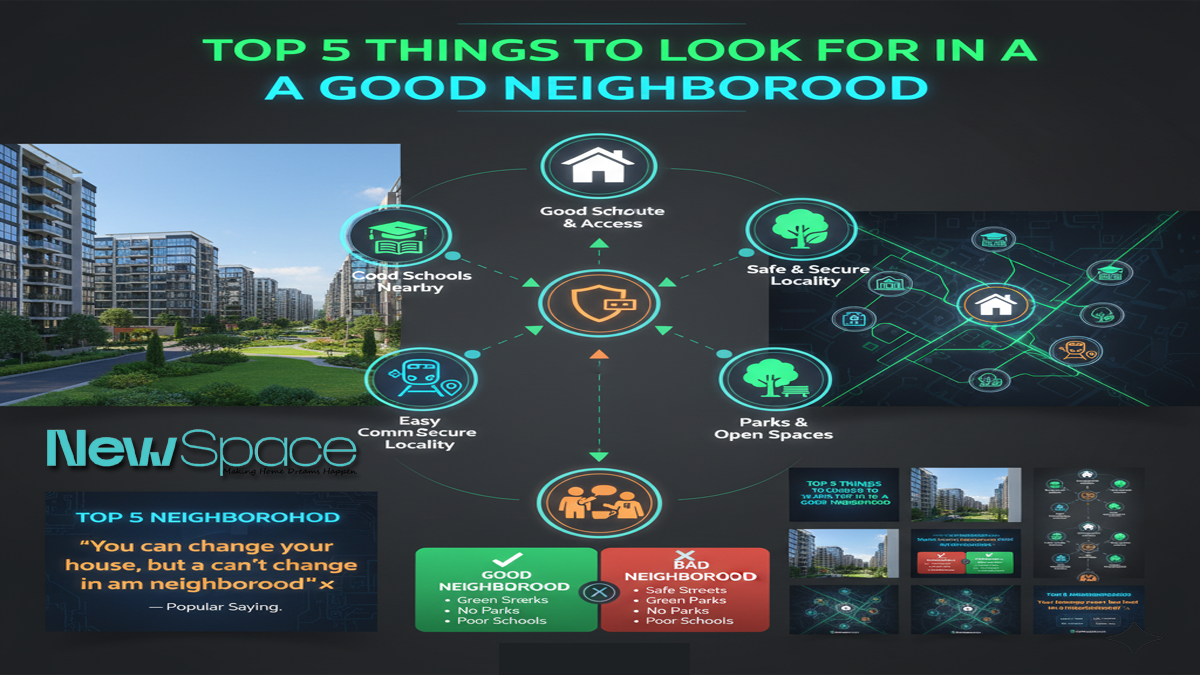
So, before you sign the deal, here are the top 5 things to look for in a good neighborhood.
1. Schools: Education Defines Property Value
Even if you don’t have children today, the quality of nearby schools has a direct impact on property demand and resale value. Families always prioritize education, and living in a school district with reputed institutions ensures long-term benefits.
What to check:
- Proximity of schools to your potential home.
- Reputation and rankings of schools in the area.
- Availability of daycare centers, coaching classes, or extracurricular activity hubs.
- School bus and public transport routes for students.
💡 Pro Tip: Look for neighborhoods with a mix of public and private schools — it gives buyers more options and keeps the locality in demand.
2. Connectivity: Easy Commute is a Must
Your dream home won’t feel like one if you spend hours stuck in traffic. Connectivity is a key factor that influences both daily comfort and property appreciation.
What to check:
- Proximity to major roads, highways, or metro stations.
- Access to public transport (buses, metro, local trains).
- Availability of basic services nearby (hospitals, markets, offices).
- Future infrastructure projects (metro extensions, flyovers, airports).
Areas with good connectivity not only save commuting time but also tend to appreciate faster in value.
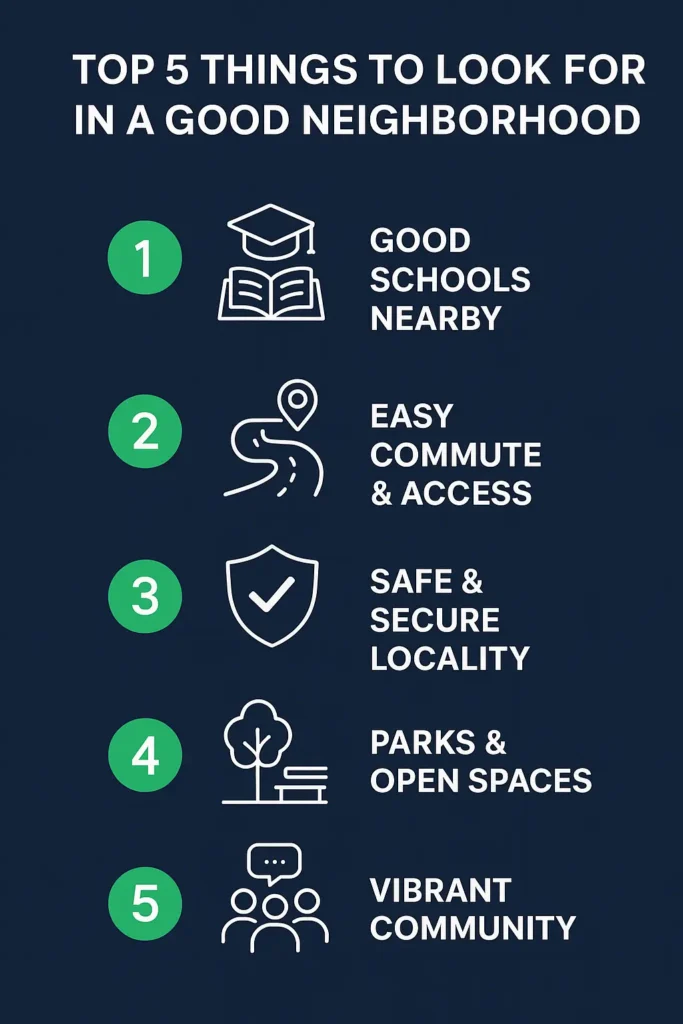
3. Safety: Peace of Mind Comes First
Safety is non-negotiable when choosing a neighborhood. Even a luxurious home feels insecure if the locality is prone to theft or crime.
What to check:
- Local crime rates (you can check with police records or online portals).
- Presence of gated communities or CCTV surveillance.
- Street lighting and well-maintained roads.
- Community policing or neighborhood watch programs.
💡 Pro Tip: Visit the neighborhood at different times of the day (especially evenings) to get a sense of safety and activity.
4. Greenery & Open Spaces: A Breath of Fresh Air
With urban areas becoming crowded, green spaces and open areas are becoming rare and highly valued. A good neighborhood should give you more than concrete walls — it should give you breathing space.
What to check:
- Parks, jogging tracks, or playgrounds nearby.
- Tree-lined streets and landscaping.
- Air quality and noise levels.
- Community gardens or lakes.
Studies show that living near green spaces improves physical and mental well-being, making it one of the top factors in choosing a residential area.
5. Social Life & Community Vibe: Feel at Home, Not Isolated
A house becomes a home only when you feel part of a community. The social environment of a neighborhood plays a huge role in your lifestyle and happiness.
What to check:
- Availability of cafes, restaurants, and shopping hubs.
- Cultural or social clubs and community events.
- Diversity and friendliness of the local residents.
- Lifestyle amenities like gyms, salons, or theaters.
💡 Pro Tip: Spend a weekend in the neighborhood before finalizing. Visit local markets, parks, and cafes — you’ll quickly know if it suits your lifestyle.
Bonus: Future Growth Potential
While the five points above cover the essentials, also consider the future growth prospects of the neighborhood. Upcoming infrastructure projects, new schools, or IT hubs can transform an area into a high-demand location, boosting both your comfort and property value.
Conclusion: Choose Neighborhood First, House Second
When buying a home, remember: you can renovate a house, but you can’t change its neighborhood. A good community should offer safety, connectivity, education, greenery, and a thriving social life. These elements ensure not just a comfortable lifestyle but also a wise investment for the future.
So before signing the deal, step back and evaluate the area thoroughly — because the right neighborhood is where your family’s happiness and memories will grow.
✍️ Editorial Note
This article is intended for informational purposes and reflects emerging trends in the real estate sector. The insights shared are based on market research, urban housing studies, and expert opinions. Readers are encouraged to consult with local real estate professionals or financial advisors before making investment or housing decisions.