
How to Identify Future Real Estate Growth Areas Before Prices Rise
By NewSpace | 🏡 Real Estate Market Insight | Real Estate | Crafting Dreams Into Adresses
Introduction: The Secret to Making Real Money in Real Estate
In real estate, most people make money not when they sell, but when they buy at the right location and the right time. The biggest profits are made by investors who buy property in areas before they become popular.
Think about areas that were once considered outskirts but are now prime locations. Prices in such places often increase 2x to 5x over time, and the early investors benefit the most.
So the real question is not which property to buy, but where to buy before everyone else discovers the location.
In this blog, I’ll explain in simple language how to identify future real estate growth areas before property prices increase, using practical indicators that experienced investors always watch.
1. Upcoming Infrastructure Is the Biggest Price Driver
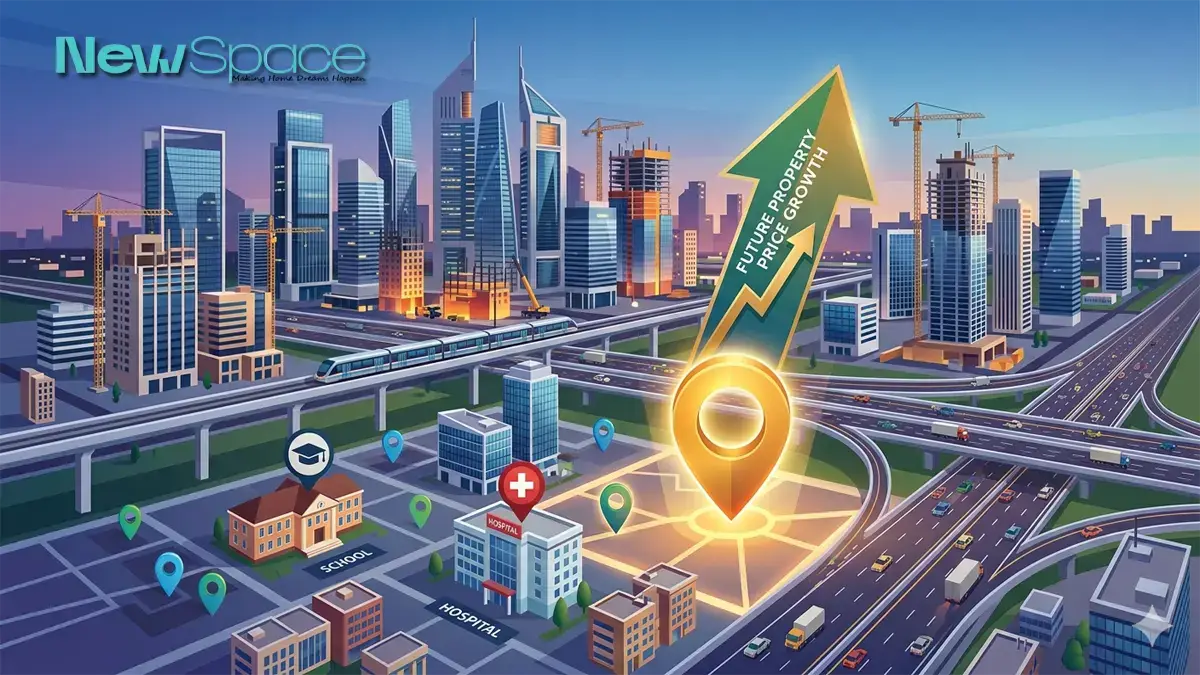
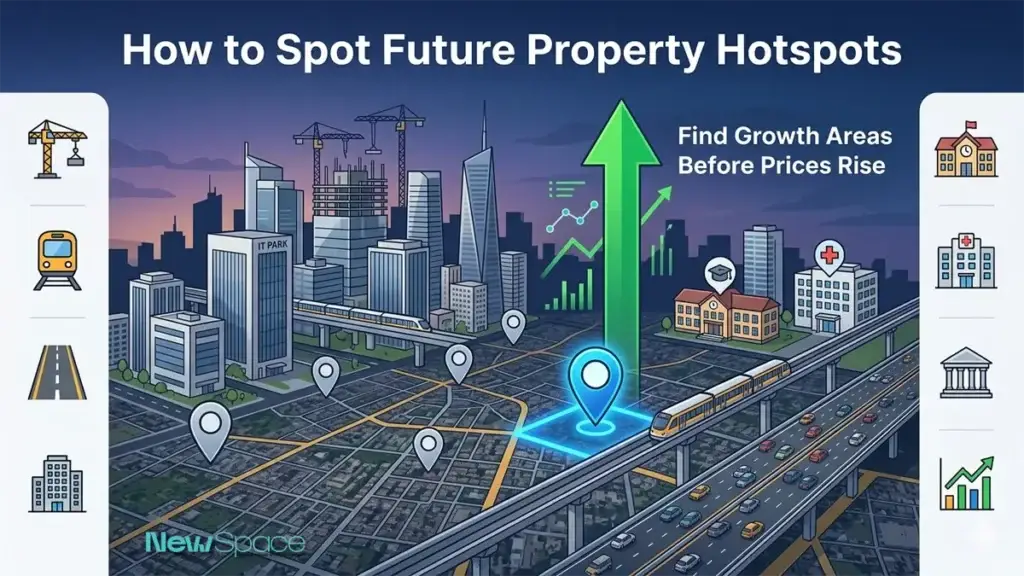
If you want to predict property price growth, follow infrastructure projects. Roads, metro lines, highways, bridges, and airports change real estate prices faster than anything else.
When a new infrastructure project is announced, land and property prices nearby usually start increasing even before construction begins.
What to Look For:
- New metro line announcements
- Highway expansion projects
- Ring roads and bypass roads
- New railway stations
- Airport expansion or new airport
- Flyovers and bridges
- Industrial corridors
Why Infrastructure Matters
Better roads and transport reduce travel time. When travel time reduces, people are willing to live further away from city centers, and this increases demand in those areas.
Simple rule:
Where roads go, real estate grows.
Many smart investors buy property near upcoming metro stations or highway junctions because those areas usually see strong appreciation.
2. New Corporate Parks and Office Spaces Bring Housing Demand
Another strong indicator of future property growth is corporate offices and IT parks.
Where companies go, employees follow. Where employees go, housing demand increases. And when housing demand increases, property prices rise.
Signs to Watch:
- Large IT parks under construction
- Business parks and commercial towers
- Warehousing hubs
- Logistics parks
- Industrial zones
- SEZ (Special Economic Zones)
- Data centers and tech campuses
If a large corporate hub is being built in an area, that location will likely see:
- New residential projects
- Rental demand
- Shops and malls
- Schools and hospitals
- Better infrastructure
This creates a complete real estate ecosystem, which drives long-term property appreciation.
3. Government Projects Are Silent Price Boosters
Government development projects are one of the most underrated real estate growth indicators.
Governments invest in:
- Smart cities
- Industrial corridors
- New townships
- Economic zones
- Tourism development
- Riverfront projects
- Urban redevelopment
- Affordable housing zones
These projects improve infrastructure, jobs, and population growth — all of which increase property demand.
Where to Find Information About Government Projects:
- Municipal corporation websites
- Urban development authority plans
- City master plans
- Infrastructure development announcements
- Budget announcements
- Local news reports
Smart investors often study city master plans to identify future growth corridors before the general public notices.
4. New Schools and Hospitals Increase Residential Demand
This is something many investors ignore, but experienced real estate investors always check social infrastructure.
Families don’t choose homes only based on price — they choose based on schools, hospitals, safety, and lifestyle.
When reputed schools and multi-specialty hospitals start opening in an area, it signals that:
- Population is expected to grow
- The area is becoming residential
- Developers are planning new housing projects
- Demand will increase
Look For:
- International schools
- Engineering or management colleges
- Multi-specialty hospitals
- Shopping malls
- Supermarkets
- Restaurants and cafes
- Banks and offices
When these start appearing, the area is usually in early growth stage.
5. Transportation Connectivity Determines Property Value
Connectivity is one of the most important factors in real estate price growth.
An area may be far from the city center, but if it has:
- Metro connectivity
- Highway access
- Railway station nearby
- Bus connectivity
- Easy airport access
Then that area can grow very fast.
People don’t mind living far away if travel time is manageable.
Investors Should Check:
- Distance to nearest metro station
- Distance to highway
- Travel time to major job hubs
- Public transport availability
- Future transport plans
Remember:
Property value depends more on travel time than distance.
6. How to Identify a Future Growth Area (Simple Checklist)
Before investing in any location, ask these questions:
✔ Is there any upcoming metro or highway?
✔ Are any corporate offices or IT parks coming up?
✔ Is the government developing this area?
✔ Are new schools and hospitals opening?
✔ Is connectivity improving?
✔ Are big developers buying land there?
✔ Are property prices still affordable compared to nearby developed areas?
If the answer to 4 or more questions is YES, then that area has strong growth potential.
7. Signs That Prices May Increase Soon
Watch for these early signals:
- Land prices start increasing
- New residential projects are launched
- Big developers enter the area
- Roads are widened
- Street lights and drainage work begins
- New shops and supermarkets open
- Rental demand increases
- Banks start approving home loans for projects there
These are signs that the area is moving from early stage → growth stage.
8. Understanding the Real Estate Growth Cycle
Every area goes through a growth cycle:
- Undervalued Stage – Empty land, low prices
- Development Stage – Roads, infrastructure, projects announced
- Growth Stage – Builders launch projects, population increases
- Peak Stage – Prices high, fully developed area
- Saturation Stage – Prices grow slowly
Smart investors always try to invest in Stage 1 or Stage 2.
That’s where maximum appreciation happens.
9. Biggest Mistake Investors Make
Most people buy property:
- Near their current home
- In already developed areas
- After prices have already increased
- Based on advertisements
- Based on emotional decisions
Smart investors buy based on future potential, not current popularity.
Real estate profits are made by seeing the future before others do.
Conclusion: Think Like a Developer, Not Just a Buyer
If you really want to succeed in real estate investment, start thinking like developers and city planners.
Ask yourself:
- Where will the city expand?
- Where will new jobs come from?
- Where will infrastructure be built?
- Where will people live in the next 10 years?
When you start thinking this way, you will start identifying future real estate growth areas before prices increase, and that’s when real estate becomes a wealth-building tool, not just a home purchase.
✍️ Editorial Note
This article is intended for informational purposes and reflects emerging trends in the real estate sector. The insights shared are based on market research, urban housing studies, and expert opinions. Readers are encouraged to consult with local real estate professionals or financial advisors before making investment or housing decisions.